
Clinical Drug Monographs for Longevity Providers
A searchable provider-facing library for longevity medicine, metabolic health, hormone optimization, peptides, sexual health, and biomarker-driven care.
The Longevity Medicine Certification Drug Library helps providers review commonly used longevity therapies with more structure.

Longevity Therapies Are Expanding Faster Than Most Providers Can Organize Them
Patients are asking about a growing list of therapies:
- GLP-1 medications
- Dual incretin medications
- Testosterone
- Estradiol
- Progesterone
- Enclomiphene
- hCG
- Anastrozole
- Sermorelin
- Tesamorelin
- Ipamorelin
- CJC-related compounds
- PT-141
- Oxytocin
- Tadalafil
- Sildenafil
- NAD+
- BPC-157
- TB-500
- KPV
- MOTS-c
- Epithalon
- Semax
- DSIP
- Kisspeptin
- Sleep, recovery, and performance agents
The challenge is not just knowing the name of the drug.
The challenge is knowing how to think through:
- Is this FDA-approved?
- Is this off-label?
- Is this compounded?
- Is this unapproved or investigational?
- What is the mechanism of action?
- What is the real clinical rationale?
- Who should not receive this therapy?
- What warnings matter?
- What adverse reactions should be discussed?
- What drug interactions should be reviewed?
- What labs are needed before therapy?
- What labs should be monitored after therapy?
- What symptoms require caution?
- When should therapy be paused?
- When should therapy be stopped?
- What should be documented?
Most providers do not need more random information.
They need organized clinical reference tools.


Structured Drug Library Built for Clinical Decision Support
The Longevity Medicine Certification Drug Library organizes therapy information into a consistent, provider-facing monograph format.
Each monograph is designed to help the provider review the therapy before clinical use, patient counseling, or roadmap planning.
The library helps providers move from scattered information to a repeatable review process.
Instead of asking:
“What do I remember about this therapy?”
The provider can ask:
“What does the monograph say about regulatory status, contraindications, monitoring, adverse reactions, and stop conditions?”
That shift matters. Because longevity medicine is not safe when it is built around memory, trends, or social media popularity. It is safer when it is built around structured review.

Every Monograph Follows a Clinical Format
Each drug monograph is organized so providers can quickly review the information that matters most.
1. Summary of the Therapy
A concise overview of the drug, compound, peptide, hormone, or therapy category.
Includes:
- Drug name
- Common names
- Drug class
- Therapy category
- Primary clinical relevance
- Provider-facing summary
2. Regulatory Status
Clear explanation of whether the therapy is:
- FDA-approved
- FDA-approved for a specific indication
- Used off-label
- Available as a compounded medication
- Investigational
- Unapproved for human use
- Research-use only, when applicable
- Subject to regulatory or sourcing concerns
3. Mechanism of Action
A clinically useful explanation of how the therapy works.
Includes:
- Primary receptor targets
- Pathway effects
- Hormonal effects
- Metabolic effects
- Inflammatory effects
- Mitochondrial effects
- Neuroendocrine effects
- Tissue-specific effects, when relevant
4. Clinical Rationale
Explains why providers may discuss or consider the therapy in longevity care.
This may include relevance to:
- Metabolic health
- Weight management
- Body composition
- Hormone optimization
- Sexual health
- Sleep
- Recovery
- Inflammation
- Performance
- Mitochondrial support
- Cognitive or neuroendocrine function
- Healthspan optimization
5. Indications
For FDA-approved medications, this section clearly identifies approved indications.
For off-label, compounded, or unapproved therapies, the monograph should distinguish between:
- Approved indications
- Off-label clinical use
- Common practice patterns
- Investigational interest
- Unsupported claims
- Areas requiring caution
6. Contraindications
This section identifies patients who should generally not receive the therapy or require significant caution.
Contraindications may involve:
- Pregnancy
- Breastfeeding
- Cancer history
- Cardiovascular disease
- Liver disease
- Kidney disease
- Endocrine disorders
- Psychiatric conditions
- Seizure history
- Medication interactions
- Allergy or hypersensitivity
- Prior adverse reaction
- High-risk lab abnormalities
7. Exclusion Criteria
This section helps providers decide when a patient may not be appropriate for a therapy within a structured longevity program.
Examples may include:
- Uncontrolled disease
- Unstable psychiatric condition
- Active malignancy, depending on therapy
- Severe untreated sleep apnea, depending on therapy
- Significant abnormal baseline labs
- High-risk medication combinations
- Inability to follow monitoring requirements
- Unrealistic patient expectations
- Lack of appropriate indication
- Patient seeking therapy despite known risk
8. Warnings and Precautions
This section explains clinical risks providers should review before use.
Warnings may include:
- Endocrine effects
- Cardiovascular risks
- Thrombotic risks
- Glucose changes
- Blood pressure effects
- Mood or psychiatric effects
- Fluid retention
- GI effects
- Injection site reactions
- Fertility effects
- Cancer-related cautions
- Drug-specific safety concerns
- Monitoring requirements
9. Adverse Reactions
This section organizes side effects by frequency and clinical relevance when data are available.
May include:
Common adverse reactions
Less common adverse reactions
Serious adverse reactions
Injection-related reactions
Lab abnormalities
Symptoms requiring urgent review
Symptoms requiring treatment pause
Symptoms requiring discontinuation
10. Drug Interactions
This section helps providers review interaction risks.
May include interactions with:
- Antihypertensives
- Anticoagulants
- Antiplatelet drugs
- Diabetes medications
- Insulin
- Thyroid medication
- Hormonal therapies
- PDE5 inhibitors
- Psychiatric medications
- Steroids
- Immunosuppressants
- CNS-active medications
- Other peptides or compounded therapies
11. Baseline Labs
This section lists labs providers may need before therapy consideration.
Depending on the therapy, this may include:
- CBC
- CMP
- Fasting glucose
- Hemoglobin A1c
- Fasting insulin
- Lipid panel
- TSH
- Free T4
- Free T3
- Estradiol
- Total testosterone
- Free testosterone
- SHBG
- LH
- FSH
- Prolactin
- IGF-1
- PSA
- hs-CRP
- ApoB
- Lipoprotein(a)
- Vitamin D
- B12
- Ferritin
- Urinalysis
- Pregnancy test, when applicable
12. Monitoring Labs
This section explains what should be followed after therapy begins.
Monitoring may include:
- Safety labs
- Therapeutic response markers
- Hormone levels
- Metabolic markers
- Renal function
- Liver function
- Glucose markers
- Lipids
- CBC changes
- PSA, when applicable
- IGF-1, when applicable
- Inflammation markers
- Nutrient markers
- Therapy-specific labs
13. Monitoring Frequency
This section gives a structured framework for follow-up timing.
Possible monitoring intervals:
- Baseline
- 4 weeks
- 6 to 8 weeks
- 8 to 12 weeks
- Every 3 months
- Every 6 months
- Annually
- Earlier if symptoms or side effects occur
The exact frequency depends on the therapy, patient risk profile, baseline abnormalities, dose changes, and provider judgment.
14. Dose Considerations
This section may discuss general dosing concepts when appropriate.
It should be written carefully.
Suggested language:
Dose selection should be individualized based on indication, patient risk factors, regulatory status, product labeling when applicable, route of administration, clinical response, adverse reactions, and provider judgment.
For FDA-approved medications, prescribing information should be reviewed.
For compounded, off-label, unapproved, or investigational therapies, providers must verify legal and clinical appropriateness before use.
15. Stop Conditions
This is one of the most important sections.
Every longevity therapy should have a clear reason to continue, pause, or stop.
Stop or pause conditions may include:
- Serious adverse reaction
- New contraindication
- Significant lab abnormality
- Worsening symptoms
- No clear clinical indication
- Lack of benefit after appropriate trial
- Patient nonadherence with monitoring
- Pregnancy
- New cancer diagnosis, depending on therapy
- Cardiovascular event
- Severe mood change
- Severe GI symptoms
- Uncontrolled blood pressure
- Patient request
- Provider concern
- Regulatory or sourcing concern
16. Patient Counseling
This section helps providers explain therapy risks and expectations.
Counseling may include:
- What the therapy is
- Why it is being considered
- What is known
- What is uncertain
- Expected timeline
- Common side effects
- Serious symptoms to report
- Monitoring requirements
- Lifestyle support
- Medication adherence
- Pregnancy precautions
- Off-label or unapproved status, when applicable
- When to contact the clinic
- When to seek urgent care
17. Documentation Guidance
This section helps providers document clinical reasoning.
Documentation prompts may include:
- Patient goal
- Clinical rationale
- Relevant history
- Baseline labs reviewed
- Contraindications reviewed
- Medication interactions reviewed
- Risks discussed
- Alternatives discussed
- Regulatory status discussed
- Patient questions answered
- Monitoring plan established
- Follow-up interval
- Stop conditions reviewed
- Provider judgment documented
18. Evidence Summary
A concise summary of the evidence behind the therapy.
May include:
FDA labeling
Clinical trials
Review articles
Mechanistic studies
Human evidence
Animal or preclinical evidence
Strength of evidence
Limitations
Areas of uncertainty
Regulatory concerns
Clinical interpretation
19. References
Each monograph should include references where appropriate, including:
- FDA labeling
- Clinical trial literature
- Peer-reviewed reviews
- Professional society guidance
- Safety communications
- Relevant regulatory information
Organized by the Way Providers Actually Practice
Metabolic Health and Weight Management
Potential monographs:
- Semaglutide
- Tirzepatide
- Liraglutide
- Metformin
- Acarbose
- Bupropion/naltrexone
- Phentermine/topiramate
- Orlistat
- Tesofensine, if included as investigational or non-standard
- Compounded GLP-1 considerations
- GLP-1 safety and monitoring overview
Provider questions this category answers:
- Who is an appropriate candidate?
- What baseline labs are needed?
- What GI risks should be discussed?
- What about gallbladder disease?
- What about pancreatitis history?
- How should weight loss be monitored?
- How do we protect lean mass?
- When should treatment be paused?
Hormone Optimization
Potential monographs:
- Testosterone cypionate
- Testosterone gel
- Estradiol patch
- Estradiol cream
- Progesterone
- Enclomiphene
- Clomiphene
- hCG
- Anastrozole
- DHEA
- Pregnenolone
- Thyroid hormone overview
- Desiccated thyroid considerations
- Levothyroxine
- Liothyronine
Provider questions this category answers:
- What labs are needed before hormone therapy?
- What are the contraindications?
- What monitoring is required?
- What side effects should be discussed?
- What happens to fertility?
- When should therapy be stopped?
- How should patients be counseled?
Growth Hormone Axis and Body Composition
Potential monographs:
- Tesamorelin
- Sermorelin
- Ipamorelin
- CJC-1295 related compounds
- CJC-1295 without DAC
- CJC-1295 with DAC
- GHRP class overview
- IGF-1 monitoring overview
- Growth hormone secretagogue safety overview
Provider questions this category answers:
- What is the difference between GHRH and GHRP agents?
- What is FDA-approved and what is not?
- What does IGF-1 monitoring mean?
- What patients require caution?
- What symptoms should be monitored?
- What are the glucose concerns?
- What are the cancer-related cautions?
- When should therapy be stopped?
Sexual Health
Potential monographs:
- Tadalafil
- Sildenafil
- Vardenafil
- Avanafil
- PT-141
- Oxytocin
- Topical therapies, if included
- Female sexual health overview
- Male sexual health overview
Provider questions this category answers:
- What cardiovascular risks matter?
- What medications interact with PDE5 inhibitors?
- What about nitrates?
- What about blood pressure?
- What side effects should be discussed?
- What is the role of hormones?
- When should sexual symptoms trigger further workup?
Peptide Medicine
Potential monographs:
- BPC-157
- TB-500
- KPV
- MOTS-c
- Epithalon
- Semax
- DSIP
- Kisspeptin
- Thymosin alpha-1
- Thymosin beta-4
- AOD-9604
- GHK-Cu
- LL-37
- Selank
- VIP
- Melanotan II, with strong safety caution if included
Provider questions this category answers:
- Is this FDA-approved?
- Is this unapproved?
- Is this investigational?
- What is the evidence level?
- What risks are unknown?
- How should patients be counseled?
- What documentation is needed?
- What monitoring makes sense?
- When should providers avoid use?
NAD+, Mitochondrial, and Cellular Support
Potential monographs:
- NAD+
- NMN
- NR
- Glutathione
- CoQ10
- MOTS-c
- Methylene blue
- L-carnitine
- Alpha-lipoic acid
- Mitochondrial support overview
Provider questions this category answers:
- What is the proposed mechanism?
- What is the evidence level?
- What claims should be avoided?
- What side effects are possible?
- What drug interactions matter?
- What patient populations require caution?
Sleep, Recovery, and Neurocognitive Support
Potential monographs:
- Melatonin
- DSIP
- Semax
- Selank
- Magnesium
- Glycine
- Low-dose naltrexone
- Cognitive support overview
- Sleep optimization overview
Provider questions this category answers:
- What is appropriate for sleep support?
- What evidence exists?
- What are the psychiatric cautions?
- What medications may interact?
- What should be monitored?
Anti-Inflammatory and Immune Support
Potential monographs:
- Low-dose naltrexone
- KPV
- Thymosin alpha-1
- Glutathione
- Omega-3 fatty acids
- Curcumin, if nutraceuticals are included
- Immune modulation overview
Provider questions this category answers:
- What is evidence-informed?
- What is speculative?
- What should not be claimed?
- Which patients require caution?
- What monitoring is appropriate?
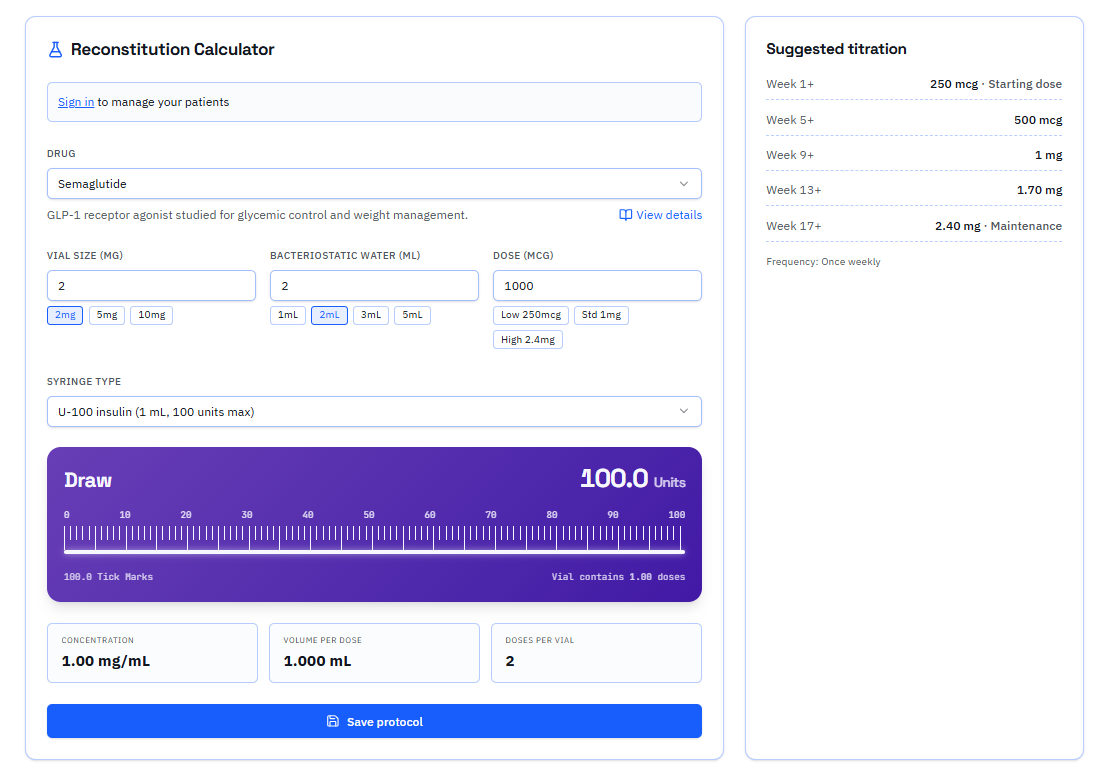
Example Monograph Preview : Semaglutide
Category: Metabolic Health and GLP-1 Therapy
Regulatory Status: FDA-approved for specific diabetes and chronic weight management indications under branded products. Compounded versions require separate legal, sourcing, and clinical review.
Clinical Rationale: May support weight loss, appetite regulation, glycemic improvement, and metabolic risk reduction in appropriate patients.
Key Contraindication Review: Personal or family history of medullary thyroid carcinoma, MEN2, hypersensitivity, pregnancy considerations, and other label-specific precautions.
Baseline Review: Weight, BMI, metabolic history, medication list, diabetes status, renal function, liver function, A1c, lipids, pregnancy status when applicable, pancreatitis and gallbladder history.
Monitoring: GI symptoms, hydration, weight loss rate, lean mass preservation, glucose changes, renal function if clinically indicated, gallbladder symptoms, pancreatitis symptoms.
Stop or Pause Considerations: Severe GI intolerance, suspected pancreatitis, pregnancy, serious hypersensitivity, significant clinical deterioration, or provider concern.

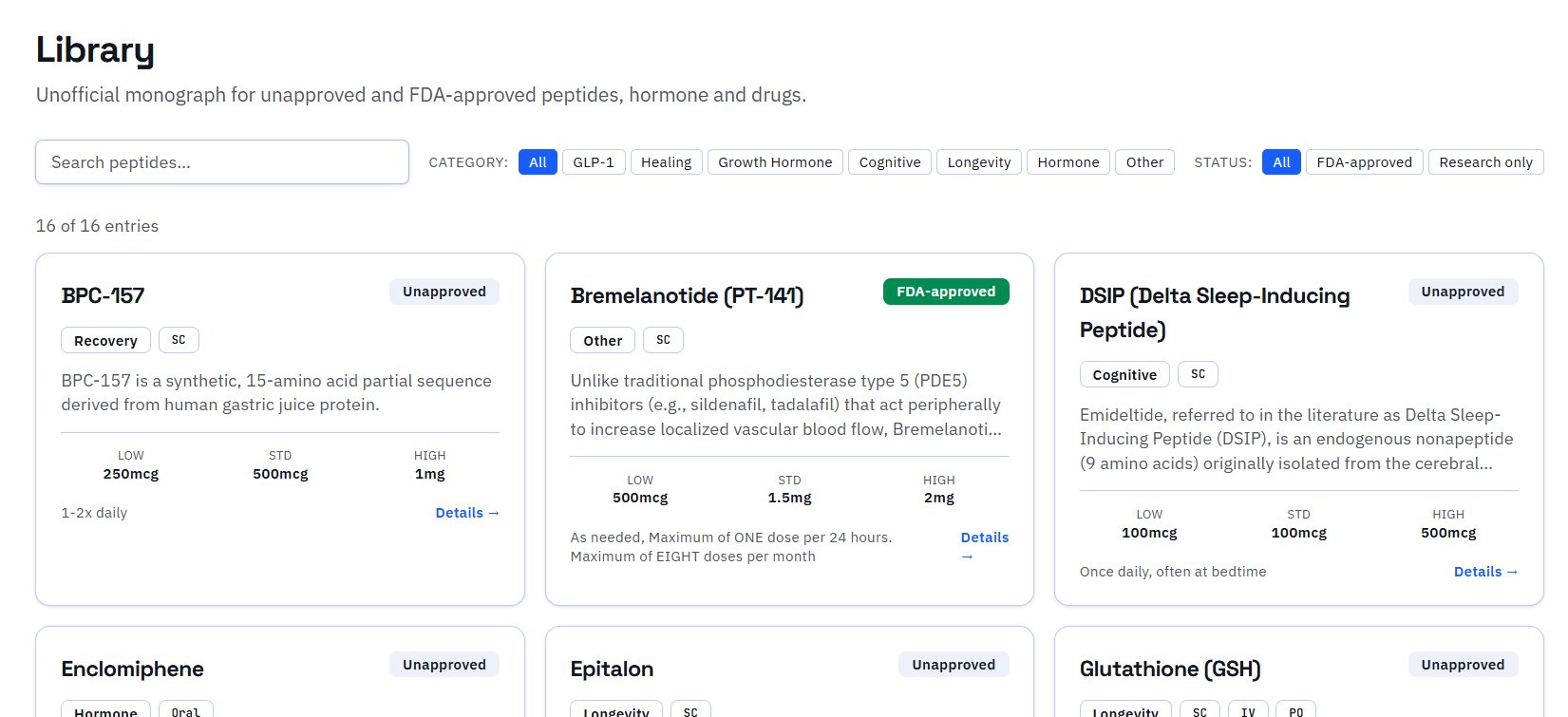
Drug Library
Clinical Intelligence Built Into Every Monograph
The Drug Library is more than a collection of drug references. It helps providers quickly search therapies, review risks, and integrate treatment considerations into patient-specific longevity roadmaps.
Providers can search by drug name, therapy category, regulatory status, contraindications, monitoring requirements, and safety considerations. Each monograph highlights key clinical information including FDA status, off-label use, contraindications, baseline labs, monitoring recommendations, adverse effects, and patient counseling points.
When connected to the Roadmap Tool, the platform can help identify potential contraindications, required baseline testing, monitoring intervals, drug interactions, side effect considerations, and documentation prompts based on the patient's goals, history, and lab values.
The goal is simple: help providers separate evidence from hype, improve clinical decision-making, and create a safer, more structured approach to longevity medicine.
Give Your Practice a Better Clinical Reference System
Longevity providers need more than scattered notes, social media posts, and one-off protocols. They need a structured way to review therapies before discussing them with patients. The Drug Library helps providers organize therapy information around risk, monitoring, patient selection, counseling, and documentation.
Built by Providers Who Understand Clinical Training, Aesthetics, Longevity, and Practice Growth

Longevity Medicine Certification was co-founded by Dr. Jay Park, MD, a physician entrepreneur with full-time experience in the aesthetics, wellness, and longevity industry since 2006.
Dr. Park has been active in the anti-aging and longevity space since the early days of the modern movement, including involvement with the American Academy of Anti-Aging Medicine and work as a Suracell Ambassador, focusing on early personal genetic analysis and nutrigenomics.
Since 2006, Dr. Park has helped launch, train, support, or advise hundreds of practices, including :
• Medspas
• A national medspa franchise
• Plastic surgery offices
• Integrative medicine practices
• Functional medicine clinics
• Anti-aging and longevity centers
• Ketamine treatment clinics for depression
• Concierge medical practices
• Aesthetic and wellness practices expanding into advanced care models
Dr. Park has also served as a speaker, trainer, consultant, or partner with companies in aesthetics and medical wellness, including :
• Galderma
• Merz
• Thermage
• Obagi
• Prollenium
• Medicis Pharmaceutical Corporation
• Valeant Pharmaceuticals
He is also the co-founder of Cosmetic Medical Training and Medspa Circle, two platforms focused on clinical training, aesthetic practice development, provider education, medical spa operations, and business support.
Drug Library Access by Membership Level
Certification Only
Best for providers who want education and foundational training.
Includes:
- Online certification course
- Core modules
- Certificate of completion
- Foundational clinical framework
Drug library access may be limited or not included depending on plan design.
Certification Plus Drug Library
Best for providers who want training plus searchable clinical monographs.
Includes:
- Everything in Certification Only
- Full drug monograph library
- Therapy category summaries
- Regulatory status review
- Contraindication summaries
- Monitoring guidance
- Patient counseling points
- Documentation prompts
Full Clinical Platform
Best for providers who want training, monographs, roadmap generation, and patient monitoring.
Includes:
- Everything in Certification Plus
- Drug Library
- Patient intake tool
- Lab input tool
- Goal prioritization
- Roadmap generator
- Follow-up roadmap updates
- Side effect tracking
- Patient app access
- Monitoring recommendations
- Clinical documentation prompts
Practice Builder
Best for providers launching or scaling a longevity service line.
Includes:
- Everything in Full Clinical
- Platform
- Clinical SOPs
- Consent templates
- Patient education resources
- Practice workflows
- Pricing templates
- Membership model templates
- Marketing templates
- Staff training tools
- Launch checklist
- Optional consulting or office hours
A Better Way to Organize Longevity Therapy Information
Random Online Drug Information
- Scattered content
- Often consumer-facing
- May overstate benefits
- Hard to compare therapies
- Limited documentation support
- Often ignores regulatory status
- Not connected to workflow
- Focuses on what is popular
Longevity Medicine Certification Drug Library
- Structured monograph format
- Provider-facing clinical education
- Emphasizes risk, status, and monitoring
- Organized by category and clinical use
- Includes documentation prompts
- Clearly distinguishes FDA-approved, off-label, compounded, and unapproved
- Connects to roadmap and monitoring tools
- Focuses on what must be reviewed
What Providers Are Saying

“This gave our practice a framework for thinking through longevity care instead of just adding random treatments to the menu"

“The most valuable part was learning how to connect patient goals, labs, contraindications, and follow-up monitoring.”

“The certification helped our team understand the difference between offering popular therapies and building a structured clinical program.”
Frequently Asked Questions
Is the Drug Library only for physicians?
No. The Drug Library is designed for licensed healthcare providers and clinical teams, including physicians, PAs, NPs, RNs, and supervised clinical staff. Use of the information must remain within each person’s license, scope of practice, and state-specific rules.
Does the Drug Library tell me what to prescribe?
No. The Drug Library is an educational and clinical reference tool. It does not diagnose, treat, prescribe, or replace provider judgment.
Does the library include FDA-approved medications?
Yes. The library may include FDA-approved medications used in metabolic health, hormone care, sexual health, and other longevity-adjacent areas.
Does the library include off-label therapies?
Yes. Some monographs may discuss off-label uses for educational purposes. Providers are responsible for determining legal, ethical, and clinical appropriateness.
Does the library include unapproved peptides?
Yes. Some unapproved or investigational peptides may be included for educational, safety, regulatory, and risk-review purposes. Inclusion in the library does not mean endorsement or recommendation.
Does the library include dosing?
Some monographs may discuss dose considerations when appropriate, especially for FDA-approved medications where labeling exists. Dosing decisions must be made by the licensed provider based on patient-specific factors, labeling, regulations, product source, and clinical judgment.
Does the library include lab monitoring?
Yes. A major purpose of the library is to help providers identify baseline labs, monitoring labs, follow-up timing, and stop conditions.
Can I use the library with the roadmap tool?
Yes. The Drug Library is designed to connect with the roadmap tool so therapy-specific cautions, labs, contraindications, and monitoring logic can support patient-specific roadmap generation.
Is this a protocol library?
It is more than a protocol library. The goal is not just to provide simple treatment instructions. The goal is to provide structured clinical review, risk awareness, monitoring guidance, patient counseling, and documentation support.
How often is the Drug Library updated?
The Drug Library is designed to be updated as new clinical evidence, labeling changes, regulatory developments, and platform improvements become available.