
Become Certified in Longevity Medicine
Longevity Medicine Certification is designed for physicians, PAs, NPs, RNs, medspa teams, concierge practices, and wellness providers who want to understand how to evaluate longevity patients, interpret labs, review therapeutic options, identify risks, and build safer patient care roadmaps.
Created for Licensed Healthcare Providers and Clinical Teams Who Want a Structured Approach to Longevity, Peptide, Hormone, Metabolic, and Biomarker-driven Care.

Enhanced oxygen efficiency

Improved endurance potential

Supports mitochondrial energy production

Promotes recovery and resilience

Patients Are Asking for Longevity Medicine. Providers Need a Safer Clinical Framework.
Patients are no longer only asking for sick-care visits. They are asking for:
- Weight loss
- More energy
- Better sleep
- Hormone optimization
- Improved libido
- Peptides
- Recovery
- Performance
- NAD+
- Anti-aging therapies
- Metabolic health
- Healthspan optimization
- Lab testing
- Personalized medicine
But most providers were not trained in a structured longevity medicine model.
They may understand parts of the picture, but still need a practical framework
- What labs to order
- How to interpret common biomarkers
- Which patient goals to prioritize first
- How to review medical history
- How to identify contraindications
- How to evaluate medication interactions
- How to discuss off-label or unapproved therapies
- How to monitor patients over time
- How to document clinical reasoning
- When to pause or stop treatment
- When to refer out
Longevity care cannot be random. It needs a system.


Learn Longevity Medicine With a Practical Clinical System
The Longevity Medicine Certification program teaches providers how to think through longevity care in a structured, risk-aware, biomarker-driven way.
The training is designed to help providers move from scattered information to a repeatable clinical framework.
You will learn how to evaluate the patient, organize the data, understand therapy categories, review risks, and build a safer roadmap for ongoing care. The certification is built around four questions every longevity provider should ask:
1. What does the patient want?
Patients often present with multiple goals at once.
They may want weight loss, energy, libido, sleep, strength, recovery, appearance, and long-term health optimization.
The provider must learn how to rank goals, separate primary concerns from secondary concerns, and avoid trying to treat everything at once.
2. What does the patient need?
A patient’s goals may not match their actual clinical risks.
A patient may ask for testosterone, peptides, or weight loss medication, but their labs, symptoms, medication list, or medical history may point to a different first step.
The training teaches providers to evaluate the whole picture before building a care plan.
3. What is safe to consider?
Longevity medicine includes FDA-approved drugs, off-label uses, compounded medications, hormone therapies, sexual health medications, supplements, and unapproved or investigational compounds.
The provider must understand what requires caution, what requires monitoring, what requires referral, and what may not be appropriate for a specific patient.
4. How should the patient be monitored?
Longevity care does not end after the first prescription or treatment recommendation.
Patients need follow-up, side effect review, repeat labs, symptom tracking, and ongoing adjustment.
The certification teaches a monitoring-first approach.
Training That Connects Education to Real Patient Workflow
Most courses teach topics. This certification teaches workflow. You will learn how to connect:
- Patient goals
- Medical history
- Medication review
- Lab testing
- Risk stratification
- Therapy education
- Patient counseling
- Monitoring plans
- Documentation
- Follow-up decisions
- Stop conditions
The goal is not to memorize a list of treatments.
The goal is to build clinical judgment around longevity care.

Who This Platform Is Built For
Nurse Practitioners and Physician Assistants
For advanced practice providers who want clinical education, structured tools, and practical implementation support.
Physicians
For physicians who want to add structured longevity care to an existing practice or build a dedicated concierge longevity model.
Registered Nurses
For RNs involved in patient education, intake, follow-up, injection support, care coordination, and monitoring under appropriate provider direction and state scope-of-practice rules.
Medspa Owners
For aesthetic practices that want to expand into longevity services without randomly adding treatments without structure.
Concierge Practices
For premium practices serving patients who expect personalized, biomarker-driven care and ongoing optimization.
Functional and Integrative Medicine Practices
For providers already working in wellness who want a more organized approach to therapy selection, documentation, and monitoring.
What You Will Learn
The Certification Curriculum Gives Providers a Clinical Foundation in Longevity Medicine
Core Learning Objectives
After completing the certification, providers should be able to:
✔ Explain the core principles of longevity medicine
✔ Understand biomarker-driven patient evaluation
✔ Identify common longevity patient goals
✔ Structure a longevity medicine consultation
✔ Review medical history and medication risks
✔ Determine appropriate baseline lab categories
✔ Recognize high-risk patients who may need referral or exclusion
✔ Understand common FDA-approved longevity-adjacent therapies
✔ Understand common off-label therapy categories
✔ Understand the regulatory caution around unapproved or investigational therapies
✔ Review contraindications and warnings before treatment consideration
✔ Create a monitoring plan for ongoing care
✔ Recognize common side effects and adverse reaction patterns
✔ Document risk, benefit, and clinical reasoning
✔ Use drug monographs as clinical reference tools
✔ Understand how roadmap-based care supports better follow-up
✔ Build a safer, more structured longevity service line
Comprehensive Curriculum
Foundations of Longevity Medicine
Learn the difference between traditional sick-care, wellness care, performance medicine, anti-aging medicine, and structured longevity care.
Topics include:
- What longevity medicine is
- What longevity medicine is not
- Healthspan vs lifespan
- Disease prevention vs disease treatment
- Optimization vs over-treatment
- Provider responsibility
- Clinical boundaries
- Why structure matters
The Longevity Consultation
Learn how to conduct an organized longevity consultation that captures patient goals, risk factors, symptoms, medical history, medications, and lifestyle context.
Topics include:
- Patient goal discovery
- Goal ranking
- Medical history intake
- Medication review
- Allergy review
- Family history
- Symptom inventory
- Lifestyle review
- Prior therapy review
- Red flag screening
- Patient expectation setting
Biomarker-Driven Care
Learn how labs and objective data support safer decision-making in longevity medicine.
Topics include:
- Why biomarkers matter
- Baseline testing logic
- Mandatory vs recommended vs optional labs
- Metabolic markers
- Hormone markers
- Inflammation markers
- Cardiovascular risk markers
- Nutritional markers
- Renal and liver function
- Thyroid markers
- Safety labs
- Follow-up labs
Risk Stratification and Exclusion Criteria
Learn how to identify patients who may need further evaluation, referral, caution, or exclusion before starting therapy.
- Topics include:Contraindication screening
- High-risk medical history
- Medication interaction review
- Pregnancy and fertility considerations
- Cancer history considerations
- Cardiovascular risk
- Liver and kidney disease
- Psychiatric history
- Endocrine disorders
- Sleep apnea risk
- Substance use concerns
- When to refer out
- When not to treat
Metabolic Health and GLP-1 Therapy
Learn the clinical framework for metabolic optimization and weight-related pharmacotherapy.
Topics include:
- Insulin resistance
- Obesity as chronic disease
- GLP-1 receptor agonists
- Dual incretin therapies
- Brand-name vs compounded considerations
- GI side effects
- Pancreatitis risk considerations
- Gallbladder considerations
- Lean mass preservation
- Protein and strength training
- Monitoring weight loss patients
- When to pause or stop therapy
Hormone Optimization
Learn the clinical foundations of hormone evaluation and hormone-related therapy categories.
Topics include:
- Testosterone evaluation
- Estradiol and progesterone considerations
- Menopause-related care
- Male hypogonadism considerations
- Fertility-aware options
- Enclomiphene
- hCG
- Aromatase inhibitors
- Thyroid considerations
- Hormone lab monitoring
- Contraindications
- Adverse effects
- Documentation
Growth Hormone Secretagogues
Learn how providers should think about growth hormone-related therapy categories in longevity care.
Topics include:
- Growth hormone physiology
- IGF-1
- GHRH agents
- GHRP agents
- Sermorelin
- Tesamorelin
- Ipamorelin
- CJC-related compounds
- Sleep, recovery, and body composition claims
- Glucose considerations
- Cancer caution
- Edema and joint symptoms
- Monitoring strategies
- Regulatory and compounding considerations
Sexual Health and Relationship-Centered Longevity
Learn the role of sexual health in quality of life, aging, hormones, vascular function, and patient satisfaction.
Topics include:
- Male sexual health
- Female sexual health
- Libido concerns
- Erectile dysfunction medications
- Tadalafil
- Sildenafil
- PT-141 education
- Oxytocin-related discussions
- Hormone-related sexual symptoms
- Cardiovascular screening
- Drug interactions
- Patient counseling
Peptide Medicine Overview
Learn a structured way to evaluate commonly discussed peptide therapies.
Topics include:
- What peptides are
- FDA-approved peptides
- Compounded peptide considerations
- Unapproved peptide concerns
- BPC-157
- TB-500
- KPV
- MOTS-c
- Epithalon
- Semax
- DSIP
- Kisspeptin
- NAD+ and related therapies
- Evidence levels
- Regulatory status
- Patient counseling
- Documentation
FDA-Approved, Off-Label, Compounded, and Unapproved Therapies
Learn how to communicate clearly and responsibly about different therapy categories.
Topics include:
- FDA-approved use
- Off-label use
- Compounded medication considerations
- Investigational therapies
- Unapproved drugs
- Research-use concerns
- Patient consent
- Risk disclosure
- Legal and regulatory awareness
- Documentation language
- Provider responsibility
Drug Monograph Training
Learn how to use provider-facing monographs as part of clinical review.
Topics include:
- How to read a monograph
- Mechanism of action
- Clinical rationale
- Contraindications
- Warnings and precautions
- Adverse reactions
- Drug interactions
- Baseline labs
- Monitoring labs
- Stop conditions
- Patient counseling
- Evidence summary
- Regulatory status
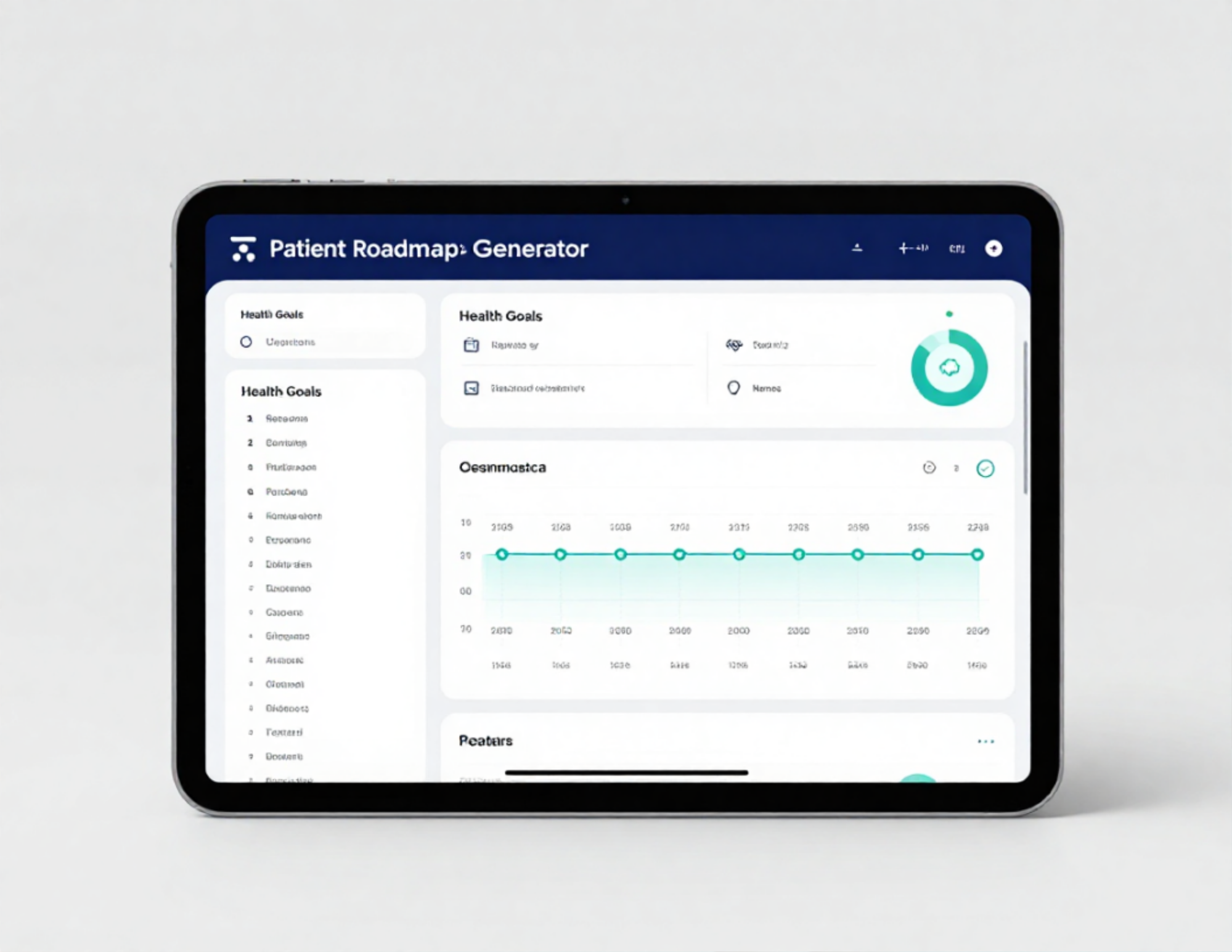
Building the Patient Roadmap
Learn how to translate patient data into a structured clinical roadmap.
Topics include:
- Goal prioritization
- Clinical sequencing
- Risk-first decision-making
- Lab-based planning
- Treatment category review
- Follow-up timelines
- Monitoring frequency
- Patient education
- Documentation prompts
- Referral logic
- Stop criteria
Monitoring and Follow-Up
Learn how to structure monthly or every-other-month follow-up in a longevity care model.
Topics include:
- Side effect review
- Symptom tracking
- Patient-reported outcomes
- Repeat lab timing
- Medication adherence
- Dose adjustment considerations
- Treatment pauses
- Escalation decisions
- Patient communication
- Longitudinal documentation
- When to modify the roadmap
Launching a Longevity Practice
Learn the operational structure needed to build a responsible longevity service line.
Topics include:
- Service menu design
- Consultation model
- Patient journey
- Lab workflow
- Membership structure
- Pricing considerations
- Consent forms
- SOPs
- Staff training
- Follow-up workflow
- Patient education
- Marketing clarity
- Practice differentiation
Built by Providers Who Understand Clinical Training, Aesthetics, Longevity, and Practice Growth

Longevity Medicine Certification was co-founded by Dr. Jay Park, MD, a physician entrepreneur with full-time experience in the aesthetics, wellness, and longevity industry since 2006.
Dr. Park has been active in the anti-aging and longevity space since the early days of the modern movement, including involvement with the American Academy of Anti-Aging Medicine and work as a Suracell Ambassador, focusing on early personal genetic analysis and nutrigenomics.
Since 2006, Dr. Park has helped launch, train, support, or advise hundreds of practices, including :
• Medspas
• A national medspa franchise
• Plastic surgery offices
• Integrative medicine practices
• Functional medicine clinics
• Anti-aging and longevity centers
• Ketamine treatment clinics for depression
• Concierge medical practices
• Aesthetic and wellness practices expanding into advanced care models
Dr. Park has also served as a speaker, trainer, consultant, or partner with companies in aesthetics and medical wellness, including :
• Galderma
• Merz
• Thermage
• Obagi
• Prollenium
• Medicis Pharmaceutical Corporation
• Valeant Pharmaceuticals
He is also the co-founder of Cosmetic Medical Training and Medspa Circle, two platforms focused on clinical training, aesthetic practice development, provider education, medical spa operations, and business support.
Ready to Learn Longevity Medicine With More Structure?
Get trained in the clinical framework behind biomarker-driven longevity care.

What You Receive After Completion
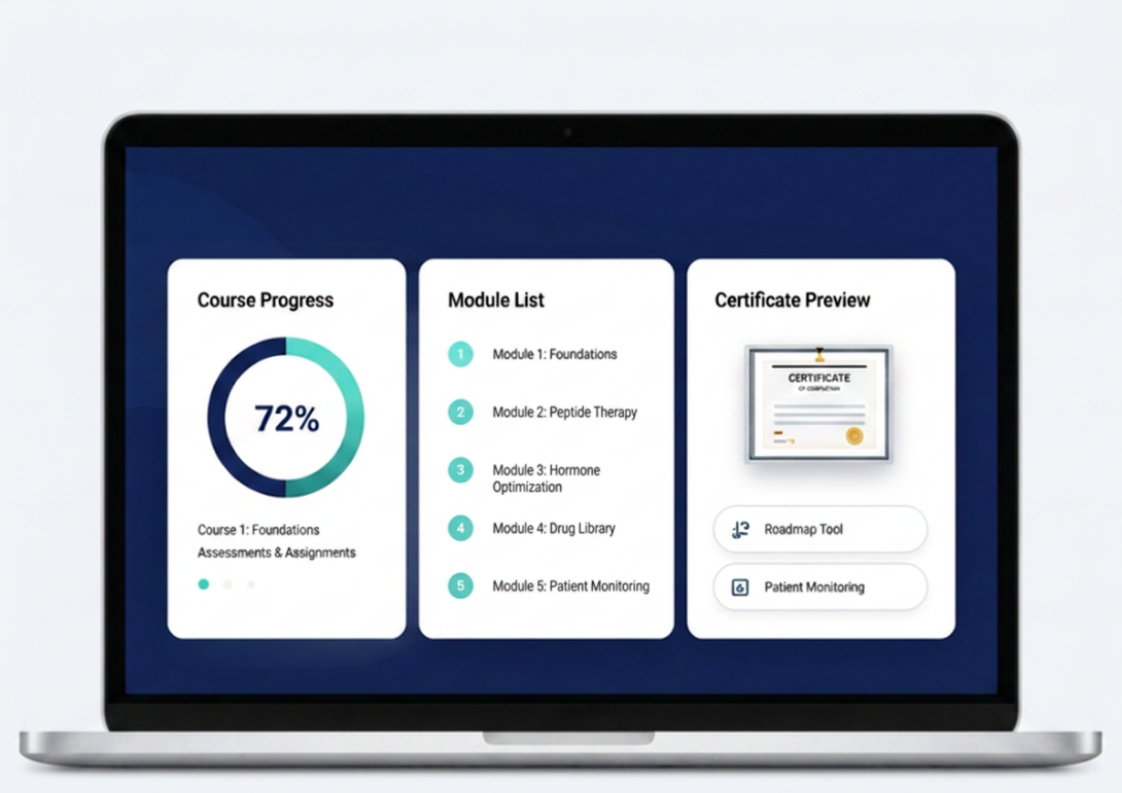
Upon completing the training, eligible participants receive a Certificate of Completion from Longevity Medicine Certification.
You also gain access, depending on your plan, to platform tools that may include:
✅ Drug monograph library
✅ Patient roadmap framework
✅ Clinical intake templates
✅ Lab review structure
✅ Monitoring checklists
✅ Documentation prompts
✅ Patient education resources
✅ Practice launch resources
✅ Follow-up workflows
✅ Roadmap tool access
✅ Patient app access
Choose the Level of Support That Fits Your Practice
Certification Only
For providers who want the online training program and certificate of completion.- Online course
- Core clinical modules
- Certificate of completion
- Foundational longevity framework
- Basic training materials
Certification Plus Drug Library
For providers who want training plus ongoing clinical reference access.- Everything in Certification Only
- Drug monograph library
- Contraindication summaries
- Monitoring guidance
- Therapy category education
- Patient counseling points
Full Clinical Platform
For providers who want training, monographs, roadmap tools, and patient monitoring support.- Everything in Certification Plus Drug Library
- Patient intake tool
- Lab input tool
- Goal prioritization
- Roadmap generator
- Follow-up roadmap updates
- Side effect tracking
- Patient app access
- Monitoring recommendations
- Documentation prompts
What Providers Are Saying

“This gave our practice a framework for thinking through longevity care instead of just adding random treatments to the menu"

“The most valuable part was learning how to connect patient goals, labs, contraindications, and follow-up monitoring.”

“The certification helped our team understand the difference between offering popular therapies and building a structured clinical program.”
Frequently Asked Questions
Is this certification only for physicians?
No. The certification is designed for physicians, PAs, NPs, RNs, and clinical teams. However, diagnosis, prescribing, treatment, and supervision requirements depend on state law, license type, scope of practice, and practice structure.
Does this certification allow me to prescribe longevity medications?
No. This is an educational certificate of completion. It does not grant prescribing authority or expand scope of practice. Prescribing authority is determined by licensure, state law, supervision requirements, and professional standards.
Is this a board certification?
No. This is not a board certification. It is a training certificate from Longevity Medicine Certification.
Are peptides included?
Yes. The curriculum may discuss commonly used peptide categories, including FDA-approved peptides, compounded peptide considerations, and unapproved or investigational peptides for educational and risk-review purposes.
Are GLP-1 medications included?
Yes. The certification includes metabolic health and GLP-1 therapy education, including patient selection, side effects, monitoring, and safety considerations.
Are hormone therapies included?
Yes. The certification includes hormone optimization education, including testosterone, estradiol, progesterone, fertility-aware options, aromatase inhibitors, and monitoring considerations.
Does the course include protocols?
The program teaches clinical frameworks, therapy category education, monitoring logic, patient roadmap development, and documentation structure. Protocol-style resources may be available depending on the membership tier, but providers must use independent clinical judgment.
Does the platform replace medical judgment?
No. The platform supports clinical decision-making. It does not diagnose, treat, prescribe, or replace the judgment of a licensed provider.
Can I use this in my medspa?
Yes. This certification is especially useful for medspas expanding into longevity, weight loss, hormone optimization, peptides, sexual health, and wellness services. All services must be offered within appropriate legal, clinical, and scope-of-practice requirements.
How long does the certification take?
This can be positioned based on your final course format. Suggested language:
The course is designed to be completed online at your own pace. Completion time depends on the provider’s background, module length, and whether optional platform resources are included.
Will I get access to the roadmap tool?
Roadmap tool access depends on your membership tier. Certification-only members may complete the course without roadmap software access. Full platform members may access the roadmap generator and patient monitoring tools.